Recent Posts
Capturing Action Items and Follow-up Requirements from Construction Review Meetings
Streamlining Post-Meeting Actions in Construction: A Core Operational Imperative
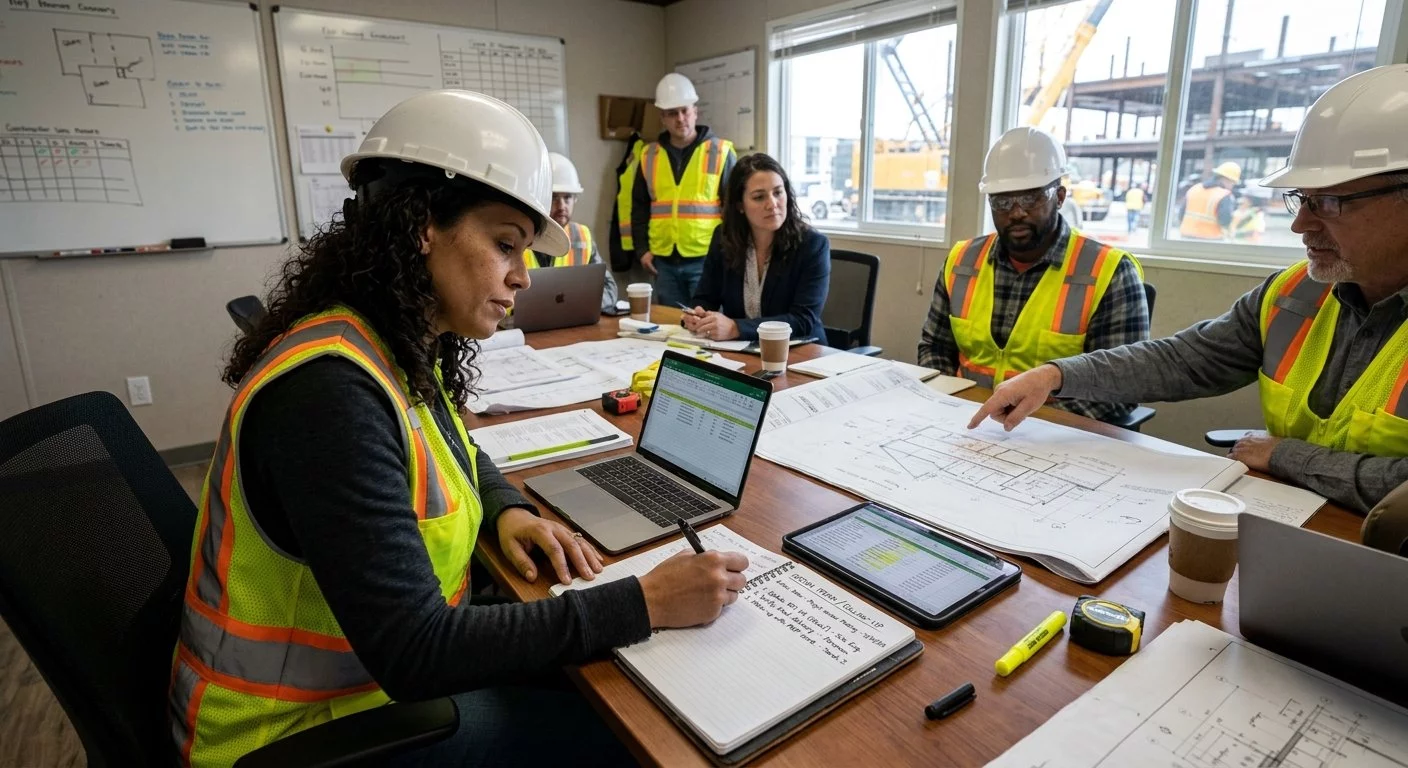
Construction review meetings serve as vital forums for critical decision-making, progress assessment, and aligning diverse project stakeholders. However, the true value derived from these essential gatherings often hinges not on the discussions themselves, but on the systematic capture and diligent follow-through of every agreed-upon action. Without a robust mechanism to translate verbal agreements into tangible tasks, even the most productive sessions risk becoming mere discussions, leading to potential delays and costly rework.
The inherent complexity of modern construction projects, involving numerous contractors, intricate technical specifications, and demanding timelines, exacerbates the challenge. Critical directives, assigned responsibilities, and crucial deadlines can easily be overlooked or misinterpreted in the absence of a structured documentation process. This casual approach can significantly impede project momentum and resource allocation, creating cascading issues throughout the project lifecycle.
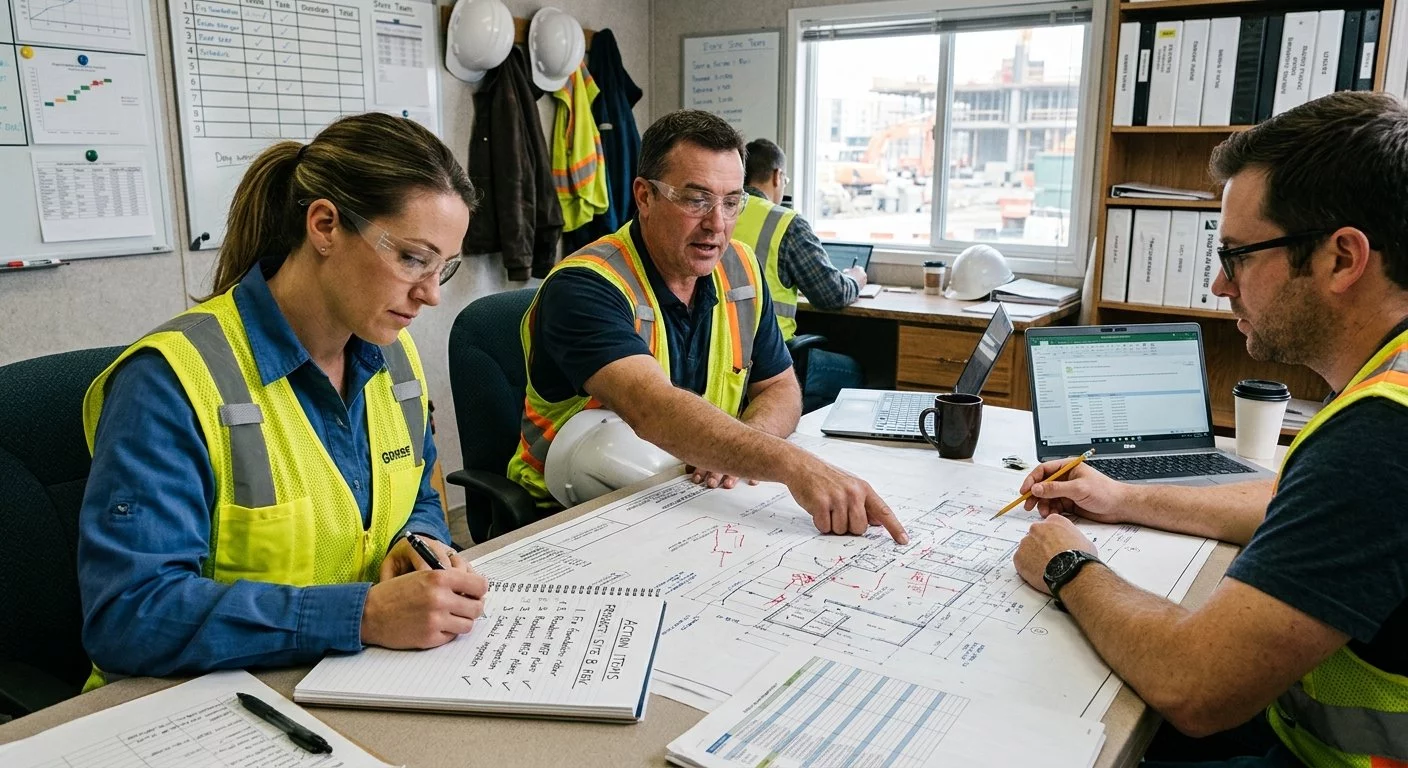
Effective capture of action items transcends simple note-taking; it is about establishing crystal-clear accountability and precise task definitions. Each assigned task requires a specific owner, a clearly defined deadline, and measurable criteria for completion. This structured methodology transforms ambiguous intentions into actionable mandates, providing a coherent roadmap for every team member involved in the project's execution phase.
Beyond individual tasks, a comprehensive system must also address all follow-up requirements. This encompasses continuous progress tracking, proactive identification of potential bottlenecks, and ensuring that all interdependencies are meticulously managed. A well-implemented follow-up mechanism acts as a crucial feedback loop, enabling project managers to monitor momentum and intervene effectively when deviations occur, maintaining project integrity.
In the dynamic and high-stakes environment of construction, precision in communication is paramount. Misinterpretations of action items can lead to significant financial implications, project delays, or even safety compromises. Therefore, a standardized, accessible, and easily disseminable method for recording and tracking these requirements becomes an indispensable tool for upholding project quality and operational efficiency across all phases.
Key Applications and Considerations
-
Integrated Project Management Platforms: These systems centralize tasks, deadlines, and responsibilities, offering a single source of truth. Advantages: Enhanced transparency, automated reminders, and reduced manual errors. Limitations: Requires significant user adoption and an initial investment in setup and training.
-
Standardized Meeting Minutes Templates: Utilizing consistent templates ensures that all critical decisions and actions are documented uniformly. Advantages: Clear structure, simplified information retrieval, and promotes consistent accountability. Limitations: Still heavily relies on the diligence and accuracy of the designated note-taker.
-
Dedicated Action Item Review Sessions: Regularly scheduled, brief meetings specifically to review the status of pending actions. Advantages: Proactive identification of potential issues, maintains project momentum, and reinforces team commitment. Limitations: Can add to meeting overhead if not managed efficiently and kept strictly focused.
Expert Perspectives on Implementation
Industry experts frequently highlight the critical distinction between merely recording and truly managing action items. While a simple list is a starting point, the real operational value emerges from an integrated management system that provides a clear audit trail and robust reporting capabilities. Without these features, even meticulously detailed notes can quickly lose their practical utility, becoming static archives rather than dynamic project tools.
A recurring point of discussion revolves around the optimal level of detail for each action item. Some proponents advocate for extreme specificity, including allocated resources, identified dependencies, and potential risks, aiming to eliminate any ambiguity. Conversely, others argue that excessive detail can overwhelm participants, preferring concise directives supplemented by accessible linked documentation or verbal clarification during review.
The role of technological solutions in this process also elicits varied opinions. While digital platforms offer undeniable benefits in tracking, collaboration, and automated notifications, some seasoned project managers caution against over-reliance. They emphasize that the human element of active listening, critical interpretation, and nuanced understanding during meetings remains irreplaceable, irrespective of the sophistication of the tools employed for documentation.
Furthermore, the integration of action items with broader project schedules and resource planning presents its own set of practical challenges. Some practitioners advocate for direct linkage, ensuring that task completion directly impacts the critical path and resource allocation. Others contend that while highly desirable, achieving this level of seamless integration can be complex to implement across diverse project environments without substantial customization of existing software solutions.
Concluding Observations and Recommendations
Effectively managing action items and follow-up requirements from construction review meetings is undeniably a cornerstone of operational effectiveness for any construction firm. It demands a deliberate and thoughtful strategy that carefully balances the need for comprehensive detail with practical, user-friendly implementation, integrating technological aids with essential human oversight.
The methodologies discussed underscore that no single approach is universally applicable to all projects or organizations. The most effective system is one that is adaptable, clearly communicated to all stakeholders, and consistently applied across the board. Prioritizing clarity, establishing unequivocal accountability, and ensuring timely execution will consistently yield positive outcomes in the complex landscape of construction undertakings.
By refining these critical processes, companies like Buildlane Scope Notes empower their teams to efficiently transform meeting discussions into tangible progress. This commitment ensures that every decision contributes meaningfully to overarching project objectives, setting a benchmark for diligent follow-through that distinguishes high-performing construction operations.
Leave a comment
Stay Informed with Buildlane
Trademark notice
Buildertrend is a trademark of its respective owners. Buildlane Scope Notes is not affiliated with or endorsed by Buildertrend. References to Buildertrend are for descriptive and compatibility purposes only.
Comments (4)
This article provides a solid overview of the challenges in construction meeting follow-ups. The points about balancing detail with practicality are particularly relevant.
The discussion on integrating action items with project schedules is a crucial one. It's often where the biggest hurdles lie, but also where the greatest efficiencies can be gained.